
Event
Castanyada
When October draws to a close, roasted chestnuts return to the streets of Barcelona, bakery windows fill with panellets, and freshly baked sweet potatoes appear in many homes. This is the Castanyada, one of the most deeply rooted autumn traditions in Catalonia and a celebration closely linked to Todos los Santos.
About this event
The Castanyada in Barcelona and Catalonia: history, traditions and what is eaten
It is celebrated mainly on the night of 31 October and 1 November, although chestnuts and panellets start to appear well before then. Today, the Castanyada is a family gathering, a party among friends, and also a popular celebration in schools, squares and civic centres. However, behind this custom lies a history connected to remembering the deceased.
What is the Castanyada or Castañada?
The Castanyada is a traditional Catalan festival associated with Tots Sants, the Día de Todos los Santos, which is celebrated on 1 November.
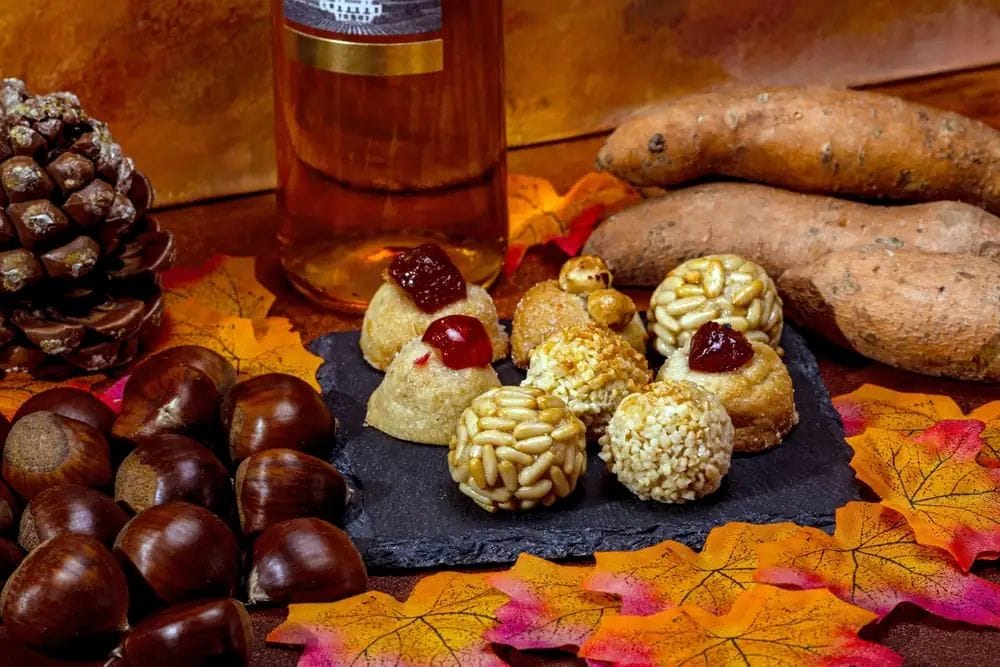
Its current version centres around a very recognisable table: roasted chestnuts, panellets, sweet potatoes and sweet wine, especially muscatel. Families and groups of friends gather to eat these foods, and in many towns popular castanyades are organised.
Although it was traditionally linked to 1 November, over time the celebration shifted mainly to the eve, so now the main night of the Castanyada is 31 October.
The origin of the Castanyada: a festival to remember the dead
The modern Castanyada preserves elements of old funeral customs related to Todos los Santos and the Día de Difuntos.
In Catalonia, it was common to gather as a family and dedicate the day to remembering those who had died. Food played an important role in these gatherings: seasonal autumn products and energy-rich foods like nuts and chestnuts were eaten.
One traditional explanation is linked to the church bell ringers. On the night of Todos los Santos, the bells would ring for hours to remember the deceased. The physical effort was considerable, and the bell ringers would regain their strength by eating chestnuts and drinking sweet wine. This interpretation has become part of the popular story about the origins of the festival.
By the end of the XVIII century, the custom was already widespread. Over time, the funeral aspect lost prominence and the Castanyada took on the family and festive character it has today.
The Castanyada in Barcelona has centuries of history
Barcelona has a particularly long-standing relationship with this tradition.
By the end of the XVIII century, a fair selling chestnuts and panellets was already being held in the streets of what is now Ciutat Vella. Stalls were set up in areas such as Hospital, Boqueria y Call, and these products gradually became inseparable from the dates of Todos los Santos.
According to historical records collected by betevé, around 1800 there were nearly 200 castanyeres working just in present-day Ciutat Vella. At that time, chestnuts could be sold raw so that each family could roast them at home.
Street sales evolved during the XIX century, giving rise to one of the most recognisable figures of the Catalan autumn: the castanyera.
Photo by nito / Shutterstock / FOTODOM
The castanyera, an inseparable figure of autumn
The traditional image of the castanyera is easy to recognise: a warmly dressed woman, with a long skirt, apron and headscarf, sitting by the fire roasting chestnuts.
She is not just a character from children's stories. Castanyeres really existed as street vendors and are part of the history of Barcelona's streets.
The first references to castanyeres similar to those of today appear in the first half of the XIX century. In 1839, there was even a ban on lighting fires and roasting chestnuts in public spaces. Decades later, in 1860, Barcelona regulated their presence through municipal permits.
The figure also became part of children's imagination. In schools and family activities, it is still common to tell stories about the castanyera in the weeks leading up to Todos los Santos.
And chestnuts are still sold on the streets. When autumn arrives, stalls appear serving them hot, usually in paper cones.
What is eaten during the Castanyada?
Gastronomy is probably the part of the tradition that has best survived over time.
There are three undisputed stars: chestnuts, panellets and sweet potatoes.
Traditionally, muscatel and other sweet wines are also included. Many other dishes may appear at modern family gatherings, but these products still immediately identify the festival.
Roasted chestnuts
The castanyes are the product that gives the celebration its name.
They are roasted in their skins and eaten hot. Traditionally, they were prepared directly over the fire using perforated containers that allowed the heat to reach the nut.
Chestnuts are also a clearly seasonal product, so their consumption fits with the agricultural calendar of autumn.
In Barcelona, it is still possible to find them at street stalls when the temperatures start to drop.
Panellets
If there is a sweet associated with Todos los Santos in Catalonia, it is the panellet.
Its traditional preparation is based on marzipan, with ingredients such as ground almonds and sugar. One of the best-known varieties is covered in pine nuts, although nowadays bakeries offer many versions: almond, coconut, chocolate, coffee and other flavours.
In Barcelona, their preparation has been documented since the XVIII century. In the past, they were linked to religious and funeral practices and were even taken to churches to be blessed.
Panellets also have European recognition as an Especialidad Tradicional Garantizada (ETG).
Making them at home is still one of the rituals of this time of year, especially with children.
Photo by SNQET / Shutterstock / FOTODOM
Roasted sweet potatoes
The third classic is the moniato, the sweet potato.
It is baked in the oven or over embers and eaten hot. Its sweet flavour goes well with chestnuts and adds another seasonal product to the table.
In the weeks leading up to Todos los Santos, it is common for the same stalls selling roasted chestnuts to also offer sweet potatoes.
Muscatel
The traditional meal can be accompanied by muscatel, a sweet wine that is part of the classic gastronomic image of the Castanyada.
Other sweet or aged wines are also consumed, and nowadays, cava.
Visiting the cemetery on Todos los Santos
The Castanyada is festive, but its connection to remembering the dead remains.
On 1 November, many families visit cemeteries to lay flowers and remember deceased relatives.
In Barcelona, this tradition also has a historical dimension. At the Montjuïc cemetery, people visit the graves of important figures from Catalan culture and history, including Jacint Verdaguer, Joan Salvat-Papasseit, Àngel Guimerà and Francesc Macià.
It is precisely this connection with the dead that helps explain why a festival we now associate with sweets, children and family gatherings was born around much more solemn dates.
Castanyada or Halloween?
In present-day Barcelona, both celebrations coexist.
Halloween began to gain ground especially at the end of the XX century and is now part of the programming of many venues, schools, shops and leisure spaces. Costumes, pumpkins and themed parties share the calendar with castanyeres, chestnuts and panellets.
In some neighbourhoods, activities are even organised that deliberately mix both traditions.
This does not necessarily mean that one has replaced the other. The Castanyada maintains a strong gastronomic and family component, while Halloween has added another way, much more focused on costumes and leisure, to celebrate the night of 31 October.
Photo by Jess Rojals / Shutterstock / FOTODOM
How the Castanyada is celebrated today in Barcelona
The celebration is no longer limited to a family dinner.
In the last days of October, schools, neighbourhood associations, markets, civic centres and community centres organise popular castanyades. Some include workshops to make panellets, children's activities, music or the distribution of chestnuts.
Bakeries fill their windows with panellets and the chestnut stalls return to different parts of the city.
At home, the simplest version requires little preparation: roast chestnuts and sweet potatoes, buy or make panellets, and gather family or friends around the table.
When is the Castanyada 2026?
In 2026, the Castanyada will be celebrated mainly on Saturday 31 October, the eve of Todos los Santos.
Sunday 1 November is Todos los Santos, the day traditionally associated with family gatherings, panellets and cemetery visits.
The celebration can extend around these dates, as many schools, associations and facilities in Barcelona organise their activities in the days before or after.
A tradition that still smells of chestnuts
The Castanyada has changed a lot since those gatherings dedicated to remembering the dead and the old Todos los Santos de Barcelona fairs.
But many of its symbols have survived.
There are still hot chestnuts, sweet potatoes, panellets and muscatel. The castanyera is still there. And so is the custom of gathering together when autumn makes itself felt.
Halloween has added costumes and pumpkins to 31 October, but in Catalonia, just walking through Barcelona and catching the smell of the first roasted chestnuts is enough to know that the Castanyada is about to begin.
Categories
- Festivals
- Festivals and fiestas